Sunday, 24 February 2019

Sense and SensibilityBy Jane Austen

The novel Sense and Sensibility is a satire on sentimentalism. Elinor represents sense, while sensibility is represented by her sister Marianne. Mrs. Henry Dashwood with her three daughters Elinor, Marianne and Margaret, is left in a very straitened situation on the death of her husband. They have to entire to Devonshire where they begin to live in a very humble cottage. Edward Ferrars is the brother of Mr. John Dashwood. John is the step son of Mr. Henry Dashwood. He had been entrusted by the latter to take care of his wife and daughter after his death. But he does not discharge his responsibilities in his respect. Edward and Elinor fall in love with each other. Marianne falls in love with a poor, unscrupulous young man, John Willoughby. Willoughby suddenly leaves for London. Marianne and Elinor go after him, But Willoughby says that he is going to be married to a rich heiress. Elinor also learns that even her lover, Edward, has been untrue to her, as he is already engaged to Lucy Steel who is the niece of Edward. Edward’s mother is not happy with his engagement to Lucy, and settles her property on his younger brother, Robert, who is a fool of the first water. Then Robert and Lucy are married, while Edward stands rejected. Then Edward marries Elinor. Marianne who has been wooed by Colonel Brandon, marries him.
x

Digging......... by seamus Haney ...

  Digging” is a relatively short poem (thirty-one lines) in free verse. While it has no set pattern of doing so, it breaks up into stanzas of two to five lines. The presence in the poem of the first person “I” who wields a pen, and the family reminiscences, identify the speaker as Seamus Heaney himself and the poem as autobiographical. The poem is filled with the terminology of Heaney’s native Ireland.
Heaney begins the poem with an image of himself, pen in hand. He hears or is remembering the sound of digging under his window. It is his “father, digging”; however, the reader is told in line 7 that it is an echo from the past. Knowing that, “to ‘look down’ ” can be understood to refer both to the memory of his father’s presence below the window and to looking back through time to it. The image of his father as he “Bends low” can also mean two things: the bending that accompanies digging and the stooping of age.
Because his father is dead, “twenty years away,” the sound can also echo the digging of graves, an image that is further reinforced by the evocations of the smell and feel of the soil. The father who is dead was a laborer, a potato farmer, as his father before him was a digger of “turf,” or peat.
The middle stanzas paint a picture of the activity of digging, as it was part of Heaney’s childhood: The father stoops “in rhythm,” and the spade is held “firmly.

Tuesday, 19 February 2019

birthday party ..... harold pinter

HERE I AM PRESENTING MY READING AND UNDERSTANDING OF THE PLAY AND THE MOVIE BIRTHDAY PARTY BY HAROLD PINTER.                       I ALSO WANT TO THANKS BARAD SIR, FOR HE PROVIDE PLATFORM CREATING THIS WORKSHEET WHERE STUDENTS CAN EXPRESS EVEN THOSE THINGS WHICH MISSED OUT DURING MOVIE SCREENING OR DISCUSSING THE PLAY AND MOVIE.                    ‘THE BIRTHDAY PARTY’ IS BASICALLY SHOWING MEANINGLESSNESS AND NOTHINGNESS AS THE THEATER OF THE ABSURD. IT SHOWS NOTHINGNESS OF HUMAN EXISTENCE. THE WORD COMEDY OF MENACE IS ALSO USED TO DESCRIBE THE PLAY.                              COMEDY OF MENACE TERM WAS COINED BY IRVING WARDLE. IT DESCRIBED IN THE PLAYS OF DAVID CAMPTON. AS THERE IS PAUSES AND SILENCE SHOWN IN THE PLAY THAT SHOWS PINTERESQUE EFFECT. PINTER ALSO USED MANY NON VERBAL DEVICES TO CREATE THE FEELING OF THREATENING.                                                         TILL THE MOVIE IS CONCERN TO GIVE THE EFFECT, I’VE FELT THE EFFECT OF MENACE DURING THE PLAY. THERE ARE MANY SCENES WHICH CREATED SUCH KIND OF EFFECT LIKE, WHILE LULU COMES AND SHE KNOCKS THE DOOR BUT THAT TIME MEG AND STANLEY GETS FRIGHTENED ABOUT THE ARRIVAL OF STRANGERS. BUT SHE WAS LULU. SO THERE WAS KNOCKING AT THE DOOR. AGAIN THERE WAS KNOCKING AT THE DOOR AND THAT TIME TWO STRANGERS WERE THERE. SO AGAIN THEY FRIGHTENED. THUS KNOCKING AT THE DOOR BECAME MEDIUM TO CREATE MENACE IN THE PLAY. SO THE KNOCKING BECOMES THREATENING AND IT IS USED AS TECHNICAL DEVICE. WHILE READING THE TEXT ALSO IT GIVES VISUAL IMAGINATION THAT IS CREATING MENACING EFFECT.                    THE MOVIE COULD AROUSE COMPARATIVELY GOOD EFFECT OF LURKING DANGER AS THE READING TEXT IT AROUSE. AS THE CHARACTER OF GOLDBERG IS CONFIRMED AND POWERFUL WHILE MCCANN HAS BEEN SHOWN UNDER THE THREATEN OF UNKNOWN THING, SHOWING HIS WEAKNESS ASMCCANN : IS THIS IT ?GOLDBERG : THIS IS IT.                              PINTER ALSO USED THAT READING NEWSPAPER AND OTHER CONNECTIONS WHICH PROVES THAT BASIC ELEMENTS AN ENCLOSED SPACE AND UNPREDICTABLE DIALOGUE, WHERE PEOPLE ARE AT THE MERCY OF ONE ANOTHER AND PRETENSE CRUMBLES AS WE CAN SEE THE REFERENCE FROM THE DIALOGUES OF GOLDBERG ALSO THAT HE REFERS TO HIS PAST AS MCCANN CAN VIEWED AS VICTIM OF    GOLDBERG, GOLDBERG WAS VICTIM O SOCIETY. THE DIALOGUES ARE ALSO UNPREDICTABLE AS IN THE INTERROGATION SCENE IT’S SEEN. HOW THE DIALOGUES ARE SPOKEN LIKE•       WHY DID YOU SEEN THAT MEN TO PLAY CHESS?•       WHAT WOULD YOU DO WITH OLD LADY?•       WHAT HAVE YOU DONE WITH YOUR WIFE?                                VIEWING MOVIE HAS OBVIOUSLY HELPED IN BETTER UNDERSTANDING OF THE PLAY ‘THE BIRTHDAY PARTY’ WITH ITS TYPICAL CHARACTERISTICS LIKE PINTERESQUE, PAUSE, SILENCE, MENACE, LURKING DANGER AS ALL THIS ARE INCLUDED VERY WELL BY THE DIRECTOR WILLIAM FRIEDKIN. SO HERE IT’S CONCLUDING THAT IT'S IMPOSSIBLE TO IMAGINE A BETTER FILM OF PINTER'S PLAY THAN THIS SENSITIVE, DISTURBING VERSION AS THIS MADE BY WILLIAM FRIEDKIN.I LOOK FORWARD FOR COUNTER ARGUE OR AGREEMENT FROM ALL MY CLASSMATES. FEEL FREE TO DISCUSS VIRTUAL WAY.THANK YOU.

gulliver's travel by johnathan swift

During the eighteenth century there was an incredible upheaval of commercialization in London, England.  As a result, English society underwent significant, “changes in attitude and thought”, in an attempt to obtain the dignity and splendor of royalty and the upper class (McKendrick,2).  As a result, English society held themselves in very high regards, feeling that they were the elite society of mankind.  In his novel, Gulliver’s Travels, Jonathan Swift satirizes this English society in many ways.  In the novel, Swift uses metaphors to reveal his disapproval of English society.  Through graphic representations of the body and its functions, Swift reveals to the reader that grandeur is merely an illusion, a facade behind which English society of his time attempted to hide from reality.
On his first voyage, Swift places Gulliver in a land of miniature people where his giant size is meant as a metaphor for his superiority over the Lilliputians, thus representing English society’s belief in superiority over all other cultures.  Yet, despite his belief in superiority, Swift shows that Gulliver is not as great as he imagines when the forces of nature call upon him to relieve himself.  Gulliver comments to the reader that beforehand he, “was under great difficulties between urgency and shame”, and after the deed says that he felt, “guilty of so uncleanly an action” (Norton,2051).  By revealing to the reader Gulliver’s shame in carrying out a basic function of life, Swift comments on the self imposed supremacy of English society.  By humbling their representative, the author implies that despite the belief of the English to be the most civilized and refined society, they are still human beings who are slaves to the same forces as every other human being regardless of culture or race.
On the second voyage, Swift turns the tables on Gulliver and places him among a race of giant people, the Brobdingnagians, where Gulliver is viewed as the inferior.  Due to his miniature size, Gulliver is able to examine the human body in a much more detailed manner.  Upon witnessing the undressing of the Maids of Honor, Gulliver expresses his aversion to their naked bodies. They were, “very far from being a tempting sight”, and gave him, “any other emotions than those of horror and disgust”, because of the acuteness to which he was able to observe their, “course and uneven [skin], so variously colored” (Norton,2104). Gulliver also talks of their moles, “here and there as broad as a trencher, and hairs hanging from (them) thicker than pack-threads” (Norton,2104).  Earlier in the novel, upon witnessing the suckling of a baby, Gulliver tells the reader that upon seeing the woman’s breast he, “[reflected] upon the fair skins of [his] English ladies, who appear so beautiful… only because they are of [his] own size” (Norton,2088). In showing Gulliver’s disgust at the sight of such prestigious and beautiful women of Brobdingnag, Swift again comments on English society through a graphic portrayal of the human body.  Swift uses the Maids of Honor as a  metaphor to comment on the women of England, whom, among eighteenth century English society, were believed to be the most beautiful of all the world.  Showing that despite their apparent beauty, they are not perfect, and suffer the same flaws and imperfections of appearance as any other women.

At one point during Gulliver’s stay in Brobdingnag, Swift comments almost directly on his distaste for the self imposed supremacy of English society over all other cultures. It happens when the King of the land, his Majesty, comments on, “how contemptible a thing was human grandeur, which could be mimicked by such diminutive insects as [Gulliver]”(Norton,2097). Here, Swift bluntly criticizes the attitude of  English society for considering themselves to be so high in rank and eminence, by implying that even the smallest and least civilized creature could assume such a high degree of superiority.
Gulliver’s Travels is a satirical novel of the eighteenth century English society, a society with superficial ideas of grandeur and nobility.  Through clever representations, Jonathan Swift successfully humbles this society’s pride and human vanity. He reveals the flaws it their thinking by reducing them to what they are, human beings, which, like any other group of human beings is able to do, have merely adopted a superficial self righteous attitude. In doing so, Swift makes a broader statement about mankind today. Despite all the self acclaimed advances in civilization and technology, we are still merely human; suffering from the same forces and flaws, impulses and imperfections as everyone else.

Thursday, 14 February 2019

ઓરીજીનાલીટી

આ વાક્ય જ્યારે પણ વાંચુ ત્યારે મને વિચારતી કરી દે છે. ઓરીજીનાલીટી એટલે શું? કદાચ “જેવા હોઈએ પ્રભુ તેવા દેખાવા”  એનું જ નામ ઓરીજીનાલીટી હશે. આ શબ્દનો ગુજરાતી અર્થ સર્ચ કર્યો તો આ મળ્યુઃ “મૂળ, અસલનું, પ્રથમનું, આદ્ય, પ્રાથમિક, તદ્દન શરૂઆતનું, પ્રાચીનતમ, અનુકરણાત્મક કે બીજા કશામાંથી નીકળેલું નહિ.”

અરે આપણું હોવુ જ બીજા કશામાંથી નીકળેલું છે. મતલબ કે સમય, સંજોગો  કે અનુભવો કે પછી માણસો જ આપણને ઘડે છે.  આપણે હોઈએ છે એનાથી કંઈક અલગ બનાવે છે અને એ જ રીતે આપણે વર્તીએ છે, તો આમાં આપણું ઓરીજીનલ શું?

જિંદગીના દરેક તબક્કે આપણી ઓરીજીનાલીટી ગુમાવતા જઈએ છે. બાળપણ જ્યાં સુધી  સમજણું ના થાય ત્યાં સુધી જ કદાચ ઓરીજીનલ  રહી શકે છે, જેમ જેમ દુનિયાદારીના ઢોળ ચડતા જાય એમ એ ઓરીજીનાલીટી વહેવાર-વર્તનમાં તો ક્યાંય ડોકાતી નથી પણ માંહ્યલામાં ઝાંકીને જુઓ તો ત્યાં ય મોહરુ પહેરેલો આત્મા દેખાય.

કોઈ પણ કામ કરવુ જોઈએ એટલા માટે નહિં પણ કરવુ પડે એટલા માટે આપણે વધારે કરીયે છે.

આપણાં ઘણાં ખરા વિચારો ફક્ત વિચારવા માટે જ હોય છે. આચરી એટલા માટે નથી શકતા કે કોઈ શુ કહેશે?

જેમા ધર્મ અને સમાજનાં વાડાઓ આપણે રચ્યા છે એમ જ આપણી આદતોના વાડામાથી ય આપણે  ભાગ્યે જ છુટી શકીએ  છે.

ઈવન પ્રકૃતિ સાથે ય પ્રાકૃતિક થઈ શકતા નથી.

આંખોમાં હવે લરઝતુ વિસ્મય નથી, ખોખલી – ખખડતી  હોંશિયારી છે.

બેફામ ભાગતા જમાના સાથે તાલ મિલાવવાનો છે, નોકરીમાં કે બિઝનેસમાં ઝડપથી પ્રગતી કરવાની છે, સમાજમાં સ્ટેટસ જાળવવાનું છે, સગા-સંબંધી ને મિત્રોમાં માન રાખવાનું છે, સંતાનોને ય ઝડપથી મેચ્યોર બનાવી દેવાના છે કે જેથી એ આપણે જ ઉભા કરેલા નકશે-કદમ પર ચાલી શકે.

હજુ તો કેટ-કેટલું કરવાનું છે જિંદગીમાં…….. લિસ્ટ લાંબુ  છે.

હવે બોલો આમાં ઓરીજીનલ ક્યાંથી રહી શકાય?

#np

Sunday, 10 February 2019

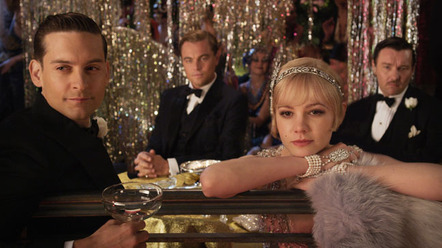
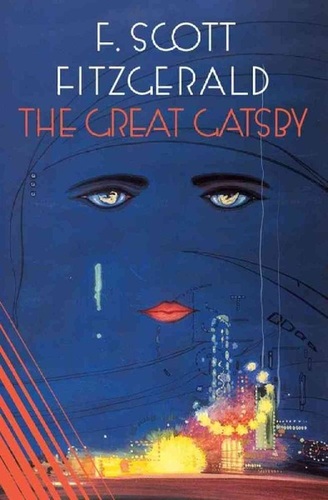
THE GREAT GATSBY....... F.SCOTT FITZGERALD ....

Malgudi days...... R. K NARAYAN


Within every person lies a small world, populated by all the people one has encountered, lessons taught by one’s circumstances, and small possibilities that open up with a path one chooses. A writer credited with capturing the essence of these small worlds in his words, R.K Narayan has authored many an iconic tales like Malgudi Days that typify the everyday Indian. His works, till today, makes one believe that every person, character, they encounter on the street is fit to be in a story.


Rasipuram Krishnaswami Iyer Narayanaswami or R.K Narayan, born at the onset of 20th century in a middle-class Brahmin household in South India, was one of the first Indian writers in English in the country. Growing up under the tutelage of his grandmother, Narayan read copious amounts of world literature as a child, stocking up from his headmaster father’s library. In his year off after school, he devoted time to writing, and well after his bachelor degree, was of the belief that being an author was his true calling. His short stories and novels are now considered classics world over, but his most notable contribution is the fictional world he created — that of Malgudi.


In this small town in Southern India without definite co-ordinates, his stories were imbued with the camaraderie, fallibility, and virtuosity that the microcosm provided. Malgudi Days, which was originally published in 1982, combines selections from two of Narayan’s short story collections: An Astrologer’s Day and Other Stories (1947) and Lawley Road and Other Stories (1956)


Written in simple prose, without grandiose words and deliberate complexity, these may be considered easy reads, but they are made up of measured sentences. The collections bind together inhabitants of the same town, however different their circumstances and station in life would be. Vastly different and equally witty, his stories about a blind beggar who tortures his watch-dog or a pick-pocket hot on a trail of riches, all look at characters with acceptance, as if the author was one of their own. As author Jhumpa Lahiri surmises, ‘there aren’t moral lessons here, just records of the frail human condition’


If objective placement comes in, it is when the town itself becomes a subject. For instance, in Lawley Road, the town’s municipality decides to nationalize all street names and landmarks, but ends up razing the statue of Sir Fredrick Lawley, who it later turns out, championed the cause of the natives!

If you grew up watching Shankar Nag’s adaptation of Malgudi
Days on Doordarshan, which starred actors like Manjunath and Girish Karnad, you will recall how Malgudi drew one closer to the real world, where people were depicted as they are. The cluster of by-lanes, shops, cafes, and the running streams and natural habitats of Malgudi were based on Narayan’s own stays in the town and countryside of Madras and Mysore. In the prefacing author’s note in an edition of Malgudi Days, Narayan says, “If I explain that Malgudi is a small town in South India I shall only be expressing a half-truth, for the characteristics of Malgudi seem to me universal”. It is this universality that garnered his work international acclaim.

Malgudi was a pervasive setting for most of his novels as well. In his first novel, Swami and his friends, Narayan introduced us to a child’s world of innocence and mischief, where his insouciance reduces everything to a cycle of play and wonder. Swami or Swaminathan, the ten year-old titular character observes the town around him with poetic distraction. Sitting in class, “It was the window, not the teacher that fascinated him”. As children often do, Narayan’s characters reduce everything to a world where only they exist. The manuscript was rejected countless times, until it reached the hands of British author Graham Greene, who fell in love with the India Narayan portrayed.

From a story about these golden days to that of undergraduates (and then onto adulthood), Narayan created more works that became part of the Malgudi series – The Bachelor of Arts (1937), The Dark Room (1938), and The English Teacher (1945). The death of his wife and consequent struggles for a steady income led him to turn inwards, and infuse more autobiographical elements in his these works.

One of his most revered works set in Malgudi was also written during this time. The Sahitya Academy award-winning The Guide, the story of a tourist guide who after a loss becomes a spiritual guide, became the hallmark of Indian cinema (although Narayan received a Filmfare award, he wasn’t too happy with the screen version)

In his fourty-year prolific oeuvre, he shied away from fame, but still managed to lecture at international universities, publish essays, and amass national awards in his own country. However, today his legacy lies not in being the harbinger of Indian writing in English and winning acclaim world over, but in remaining simply, according to writer V.S Naipul ‘the man of Malgudi’.


Some books by R. K. Narayan........


Malgudi days is a collection of 32 short funny and witty stories. Its author as I have mentioned in the title is R K Narayan. 
The stories happen in Malgudi, an imaginary town located somewhere on the banks of Sarayu (a river in South India). Even though it is common to call Malgudi an imaginary town, you will not feel it is imaginary while reading the book. You can trace it to any village in south India. The stories carry the scent and sounds of these villages and you instantly blend into the situations in the stories. You will feel as though you are the character in the story yourself and that is the secret behind the success of this immensely popular book.
Rather than revolving around a particular plot these stories wander off dreamily. Each of the stories describe the relationship between members in a family, the various social taboos prevalent in the mid ninteties. All the stories will seem faintly similar but they are vastly different from each other. The stories deal with the most ordinary men and women and that makes these stories extraordinary. Each story deals with simple people and simple issues they are faced with in real life. The stories instantly establish a connection between the reader and the characters. Some of the stories are humorous while other will shake your soul so wildly that you might cry. Anyway I can dare to say that once you read these stories the memories will last you for your lifetime. You will carry them to the grave!
Indian villages which are often depicted as poverty-ridden, infested with epidemics, occupied by good for nothing illiterate fellows have another side to them. They have a charm, a charm which I cannot explain. This charm is depicted and presented in each of the stories in this book. Each story is so full of humanity and will invoke that part of you which you have forgotten in this deplorable rat chase called life.
And the endings of each stories. They are also special. The author will never reveal what happened at the end and will leave it to your imagination. It will make you go mad thinking what would have happened. The author will tease you by leaving you wondering for ever as those endings will never be written as the author himself is dead.

Well, to come back to our lives. This book is one of those extra extra ordinary book which you MUST read. If you do not, then you are losing something very valuable.

Tuesday, 5 February 2019

My Last Duchess" A critical analysis '. [Robert Browning]


Browning's poems are studies of the character.  They are studies of the other men.  The poet stands apart and gives his characters a platform and lets them speak to us, and as they speak they unfold their character.  It was for this purpose that Browning invented a new genre of poetry known as dramatic monologue or dramatic lyric.  It has a few well-defined characteristics.  It is a compromise between the drama, the soliloquy and the lyric.  The author keeps himself entirely in the background and so it is essentially dramatic.   As only one character speaks it is a monologue.  The monologue is essentially a lyrical outpouring or a subjective self-examination.
       
     "My Last Duchess" is one of Browning's finest dramatic monologues.  The poem proves that Browning is a matchless master of this kind of poetry.  The poem also reveals the poet's deep understanding of human character and capacity to present it in the most dramatic and impressive manner.  As in the other monologues here also the chief character is the speaker of the monologue.  Here there is only one listener, who does not speak anything at all.  The central character of our poem is an Italian nobleman who intends to marry the daughter of a rich count, whose agent is the silent listener.  As his speech goes on we come to understand the character and outlook of the man.  As he narrates his relationship with his wife point by point our understanding of him gets widened.  Browning is a master of delineating the complex inner life of men.  Here we find the Duke talking about his last Duchess, but in fact he speaks more about himself.
            Usually what Browning does in his dramatic monologue is to bring the speaker before us at a crucial moment when he is most likely to reveal his character.  In 'My Last Duchess' the apt moment is when the Count's agent has come to conclude the negotiations regarding the proposal of a union between the count's daughter and the Duke.  It is quite natural that the Duke would look back into the past and think about his first wife and his relationship with her.  The snobbish Duke must have taken the agent around the house and on reaching the art gallery he must have shown the portrait of his last Duchess.  Explaining to the agent the reason behind the depth of the passion and earnest glance on the face of the portrait, the Duke briefly reveals the character of his former wife, wand in the process lays bare his own egotism, possessiveness and cruelty.
 The dramatic situation and the presence of a listener is very subtly and cleverly suggested by the occasional direct address made by the Duke to the count's agent.  Indirectly we see his curiosity to take a look at the curtained portrait and then his desire to know how such an expression of intense joy happened on the face of the portrait.  This gives occasion to the Duke to describe his former wife's character and the way in which he treated her.   His cruelty, his egotism, his jealousy minus love are all revealed to us.   Finally there is a suggestion that the agent stood back as they began to descend the steps so that the Duke may proceed.  However the Duke invites the agent to walk abreast and as they step down he points to a bronze statue of Neptune, remarking that it is a rare piece.
The poem is thus a very good example of a dramatic monologue.  It is full of action, not merely a long soliloquy delivered by a character.  It is dramatic, however small the compass may be, and it projects before us a vivid picture of all the emotion natural to a character.

Sunday, 3 February 2019

Characteristics of Elizabethan Age

Characteristics of Elizabethan Age
Introduction
This period is generally regarded as the greatest in the history of English Literature. Historically, we note in this age, the tremendous impetus received from the Renaissance from the reformation & from the exploration of the new world.
It was marked by a strong national spirit, by patriotism, by religious tolerance, by social content, by intellectual progress & by unbounded enthusiasm.
Such an age of thought, feeling & vigorous action, finds its best expression in the drama; & the wonderful development of the drama, culminating.
Though the age produced some of the excellent prose works, it is essentially an age of poetry; & the poetry is remarkable for its variety, its freshness, its youth & romantic feeling.
Characteristic Features of Elizabethan Age
Revival of Interest in Greek Literature
The ardent revival in the study of Greek literature brought a dazzling light into many dark places of interest. The new classical influences were a great benefit. They tempered & polished the earlier rudeness of English Literature.
Abundance of Output
The Elizabethan age was rich in literary productions of all kinds. Singing is impossible when one’s hearts undeclared & at any moment one may be laid prostrate.
Not till the accession of Queen Elizabeth, did a better state of things began to be. In the Elizabethan age, pamphlets & treatises were freely written.
Sometimes writers indulged in scurrilous abuses which were of personal character.
But on the whole, the output of the literature was very wide, & after the lean years of the preceding epoch, the prodigal issue of the Elizabethan age is almost embarrassing.
The New Romanticism
The romantic quest is, for the remote, the wonderful & the beautiful. All these desires were abundantly fed during the Elizabethan age, which are the first & the greatest romantic epoch (period).
According to Albert, “there was a daring & resolute spirit of adventure in literary as well as the other regions, & most important of these was an un-mistakable buoyancy & freshness in the strong wind of the spirit. It was the ardent youth of English Literature & the achievement was worthy of it.”
Translations in Elizabethan Age
The Elizabethan age witnessed translation into English of several important foreign books. Many translations were as popular as the original works.
Sir Thomas North translated Plutarch’s Lives & John Florio translated Montaigne’s Essais.
No less popular were the translations in poetry. E.g. Metamorphoses by Arthur Golding, Arisoto Orlando Furioso by Sir John Harrington, Tasso’s Terusalom Liberata by Richard Carew.
Spirit of Independence
In spite of borrowings from abroad, the authors of this age showed a spirit of independence & creativeness.
Shakespeare borrowed freely, but by the alembic of his creative imaginations, he transformed the dross into gold.
Spenser introduced the ‘Spenserian Stanza’, & from his works, we got the impression of inventiveness & intrepidity.
On the whole, the outlook of the writers during the age was broad & independent.
Development of Drama
During the Elizabethan Age, drama made a swift & wonderful leap into maturity. The drama reached the splendid perfection in the hands of Shakespeare & Ben Jonson, though in the concluding part of the age, particularly in Jacobean Age, there was a decline of drama standards.
Popularity of Poetry
Poetry enjoyed its hey-day during the Elizabethan age. The whole of the age lived in a state of poetic fervour.
Songs, lyrics & sonnets were produced in plenty, & England became nest of the singing birds. In versification, there was a marked improvement.
Melody & pictorialism were introduced in poetry by Spenser.
Prose and Novel
For the first time, prose rose to the position of first rate importance.
“Even the development of poetical drama between 1579 A.D. -1629 A.D., is hardly more extraordinary than the sudden expansion of English prose & its adaptation to every kind of literary requirement.”
The dead weight of the Latin & English prose acquired a tradition & universal application.
English Novel made its first proper appearance during this age.